 )
)
How will AI change the way travellers discover hotels? Will traditional SEO still matter? And what can hoteliers do today to remain visible and attract more direct bookings?
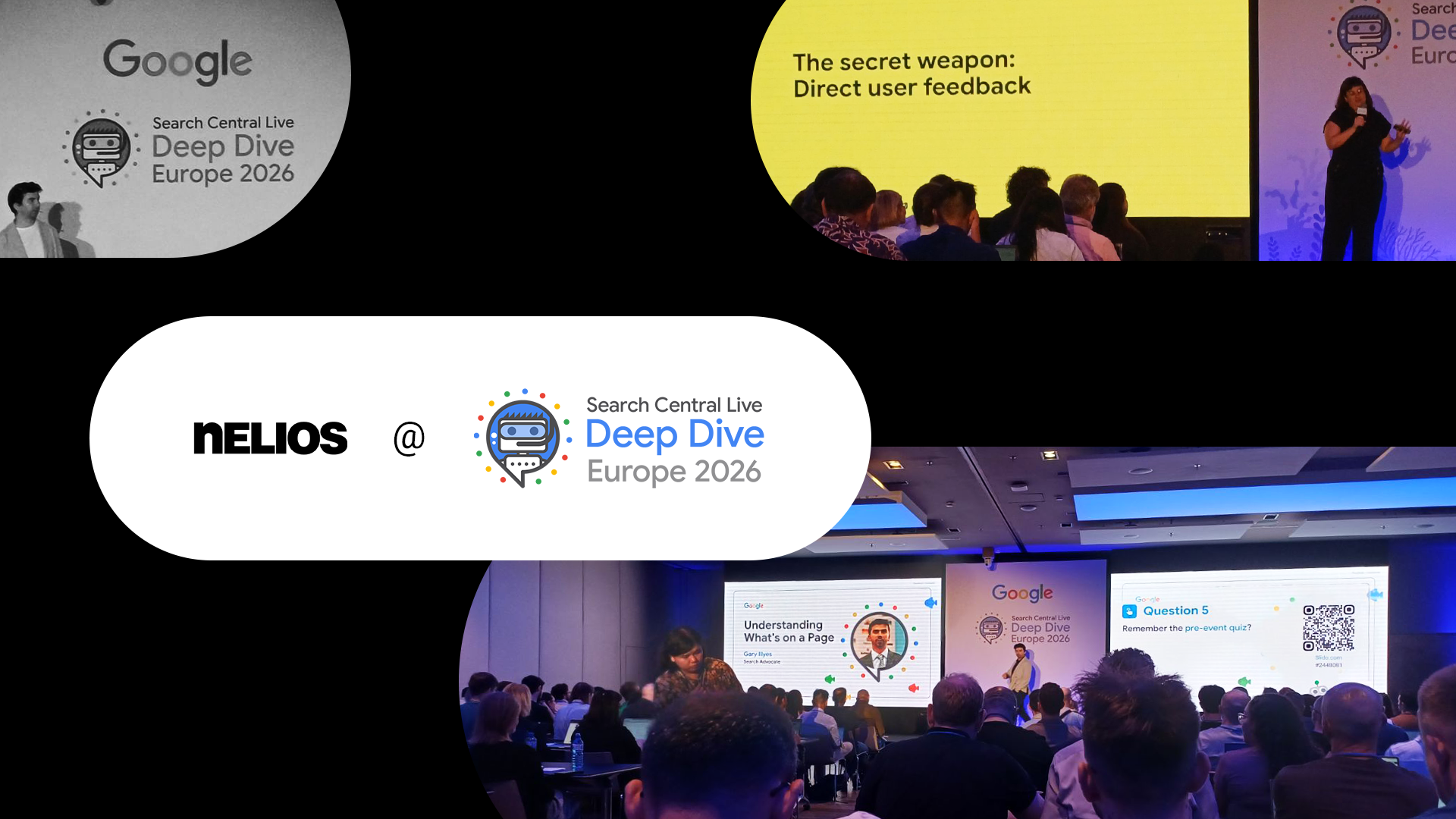
These were some of the questions explored at Google Search Central Live Deep Dive Europe 2026, held in Barcelona from 30 September to 2 October. The three-day event brought together Google experts and SEO professionals to discuss how Search works, how AI is reshaping the search experience, and what these developments mean for businesses online.
Representing Nelios at the event was our Chief Production Officer, Dimitris Kottas, who attended to gain insights into Google’s latest developments and their implications for the hospitality industry.
For hotels competing in an increasingly digital landscape, the discussions offered an important reminder: while the way travellers search is evolving, a strong digital foundation remains essential. Here are the key takeaways and what they mean for your hotel.
AI Search Is Changing, but SEO Still Matters
Generative Engine Optimization (GEO) has become a popular topic as AI-powered experiences such as Google AI Overviews and AI Mode change how people explore information online. However, one of the key messages from the event was that Google’s AI search experiences build on the same fundamental systems as traditional Search, including crawling, indexing and ranking. This means that hotels do not need to abandon their existing SEO strategies and start from scratch to adapt to AI.
Consider a traveller planning a summer holiday in Greece. They might ask an AI-powered search experience to recommend a boutique hotel with a private pool, easy beach access and authentic local experiences. Their research may involve several related questions before they narrow down their options. For hotels, being discoverable in this changing search journey starts with the fundamentals: making sure the website is accessible to search engines, providing useful and accurate information, and clearly communicating what makes the property relevant to different travellers.
Nelios perspective: We see AI search as an evolution of the digital landscape rather than a reason to abandon established SEO practices. Hotels should focus on making their properties easy to discover, understand and evaluate, while continuing to build on the foundations that support their online visibility.
Authentic Hotel Content Can Help Stand Out
AI tools make it easier to produce content quickly, but publishing more pages does not automatically make a website more useful or competitive. Throughout the event, Google experts highlighted the importance of content that demonstrates originality, effort, accuracy and genuine value. Content that simply repeats information already available across many websites gives users little reason to choose one source over another.
This is particularly relevant to hospitality. Every hotel has something distinctive to communicate, whether it is its design, atmosphere, culinary offering, location or the experiences it creates for guests. Rather than relying on generic destination descriptions, hotels can strengthen their online presence by sharing knowledge and details that reflect the property and its team.
For example, consider:
–Show what makes your property different. Go beyond standard descriptions to communicate your hotel’s character, facilities, service and guest experience.
–Share genuine local expertise. Recommend neighbourhood restaurants, cultural experiences, seasonal activities and places that help visitors discover the destination.
–Answer the questions guests actually ask. Provide clear information about room types, amenities, accessibility, dining, transport, policies and seasonal offers.
–Keep your content accurate and up to date. Outdated facilities, incorrect policies or inconsistent descriptions can create confusion and undermine trust.
–AI can support the content creation process, but it should not replace the experience and judgement of your team.
Nelios perspective: A hotel’s individuality is one of its strongest digital assets. Original content that reflects the property’s character and the team’s genuine hospitality knowledge can help prospective guests understand not just what a hotel offers, but why it might be the right choice for them.
For hotels, this highlights the value of sharing genuine local knowledge, from neighbourhood restaurants and cultural experiences to seasonal activities and sunset spots, helping guests discover the destination throughout their stay.
Your Website Is Still at the Heart of Your Digital Presence
A hotel may have excellent photography, attractive offers and compelling content, but these assets can only contribute to search visibility if search engines can access and understand the relevant information. Google’s sessions covered the technical processes behind Search, including crawling, JavaScript rendering, indexing, canonicalization and structured data. While these subjects can sound highly technical, they have practical implications for hotel websites.
Here are a few areas worth reviewing:
–Make important information easy to access. Essential details about rooms, facilities, location and services should be clearly presented and accessible to search engines.
–Use structured data appropriately. Structured data can help search engines interpret information on a page. It does not guarantee enhanced search appearances or inclusion in AI-generated answers, but it can form part of a well-maintained technical SEO strategy.
–Give images the attention they deserve. Photography plays a central role in hotel selection. Use relevant, high-quality images, descriptive alt text and supporting page content that accurately reflects the property.
–Maintain a reliable user experience. Mobile usability, website performance and straightforward navigation help prospective guests explore your offering without unnecessary friction.
–These fundamentals matter beyond search visibility. A website that communicates information clearly and works smoothly also helps potential guests evaluate their options and move towards a booking.
Nelios perspective: A hotel’s website needs to do more than look attractive. We believe technical performance and the guest experience should work hand in hand, helping visitors find the information they need and move naturally from exploring a property to considering a reservation.
Look Beyond Rankings: Connect Visibility to Direct Bookings
Search rankings are useful, but they do not tell the whole story of a hotel’s digital performance.
A traveller might discover a property through Google, explore its destination content, compare room types, return to the website several days later and eventually make a reservation. AI-powered search may also influence the early stages of this journey, when travellers are gathering ideas and deciding which properties to consider. This makes it increasingly important to understand how your hotel’s online visibility connects to meaningful business outcomes.
Instead of focusing exclusively on individual keyword positions, consider a broader set of indicators:
–Organic traffic: Are potential guests discovering your website through relevant searches?
–Engagement: Are visitors exploring room pages, facilities, offers and destination content?
–Conversion performance: Is the direct booking journey clear, convenient and easy to complete?
–Direct bookings and revenue: How effectively does your website turn interest into reservations?
–Brand visibility: Is your hotel present across the relevant digital channels where travellers research and compare properties?
AI-powered search also creates measurement challenges. No single metric can fully explain how travellers discover a hotel or how different channels contribute to a booking. For hoteliers, the priority should be to combine visibility data with website analytics and booking performance. This provides a more useful basis for deciding where to invest time and resources.
Nelios perspective: For hotels, visibility is most valuable when it reaches the right audience and contributes to business performance. We recommend looking at search data alongside website engagement and booking results, so that digital marketing decisions are guided by more than rankings or traffic alone.
Prepare for Change Without Chasing Every New Trend
One of the broader lessons from the event was the importance of understanding how Search works before reacting to every new development.Google’s search systems continue to evolve, and AI is introducing new ways for people to ask questions, explore options and discover information. But this does not mean every emerging trend requires an immediate change in strategy.
For hotels, a more sustainable approach is to focus on the areas that support both current performance and future adaptability:
-Keep your website technically accessible and well organized.
-Publish original, accurate content that reflects your property and destination.
-Make key hotel information easy to find and understand.
-Review how visitors interact with your website and booking engine.
-Measure success through a combination of visibility, engagement, conversions and direct revenue.
These priorities are not exclusive to AI search. They are part of building a digital presence that can adapt as traveller behaviour and search technology change.
Nelios perspective: No one can predict every development in search, so we believe hotels are better served by continuously improving their digital foundations, understanding their audience and measuring results than by reacting to every new trend. A consistent strategy, reviewed and adapted over time, is more sustainable than chasing quick fixes.
Timelines & Tracking: What Hoteliers Must Keep in Mind
A rare highlight from Barcelona was Google providing realistic operational timelines for their backend processes. For hotel marketers making technical changes or site updates, patience is key:
- Indexing a brand-new page: ~1.5 hours
- Resolving technical or indexing errors: 1 to 3 weeks
- Recovering from a major site migration: 1 to 3 months
- Recovering from a Google Core Update: 3 to 6 months
Additionally, Google introduced Platform Properties in Search Console, allowing businesses to link official YouTube, Instagram, TikTok, and X (Twitter) accounts. This makes it easier than ever to see how Google Search drives potential guests to your visual social media content alongside your primary booking engine.
What Does This Mean for Your Hotel?
Google Search Central Live Deep Dive Europe 2026 reinforced a message that matters to the hospitality industry: the fundamentals of SEO remain important, but hotels need to keep adapting to how travellers discover, evaluate and choose properties.
AI is becoming part of that journey, creating new ways for people to research destinations and explore their options. Hotels that combine strong technical foundations with useful, distinctive content and a clear online booking experience will be better prepared to respond to these changes. For hoteliers, the next step is not necessarily to adopt a completely new strategy. It is to make sure the existing one is built on solid foundations, reflects the property’s strengths and supports the business goals that matter most.
At Nelios, we believe effective hotel digital marketing starts with connecting technology, content and guest behaviour. By combining a strong SEO strategy with a well-performing website, the thoughtful use of AI tools and a focus on direct bookings, hotels can build a more resilient digital presence as search continues to evolve.